
Rare Cellars Hide Grande Champagne Cognac Stories
Deep beneath historic cognac houses, rare cognac cellars preserve more than barrels. They protect time, tradition, and identity. In the world of Grande Champagne cognac, these underground spaces are not simple storage areas. They are living environments where spirit slowly evolves into heritage.
Grande Champagne is widely respected for elegance and long maturation potential. Its reputation is deeply tied to cognac aging heritage, where patience defines quality more than speed or intervention.
These cellars hold silent stories shaped over decades, where each barrel reflects a different chapter of history.
Grande Champagne Cognac and Its Deep-rooted Identity in France
Grande Champagne is the most refined cru within the cognac heritage region. Its identity is shaped by soil, climate, and traditional craft passed through generations.
Natural foundation of excellence
- Chalk-rich terrain creates ideal vine stress conditions
- Vine roots grow deep, enhancing grape concentration
- Slow ripening supports balanced acidity
This combination is often referred to as chalk soil grand champagne vineyards, where terroir becomes the foundation of structure and finesse.
Cognac Terroir and the Role of Limestone Soil Impact
The identity of Grande Champagne is closely linked to cognac terroir limestone soil impact, which defines grape behaviour and spirit character.
How limestone shapes quality
- Improves drainage and root depth
- Enhances mineral expression in grapes
- Supports long-term aging potential
This terroir influence ensures that cognac from this region develops complexity over time rather than immediate intensity.
From Vine to Spirit Foundation of Distillation Craft
Before entering cellars, cognac undergoes precise transformation through controlled distillation.
Cognac distillation copper stills process
Copper stills are essential for purity and refinement:
- Remove unwanted compounds during heating
- Enhance aromatic clarity
- Support smooth spirit structure
Double distillation cognac process
The spirit is distilled twice to refine quality:
- First distillation creates raw base spirit
- Second distillation refines aroma and strength
- Final eau-de-vie becomes suitable for aging
This process ensures elegance before entering long maturation cycles.
Rare Cognac Cellars are Hidden Architecture of Time
The true transformation begins inside rare cognac cellars, where controlled environments shape long-term aging.
Why cellars matter
- Stable humidity regulates evaporation
- Cool temperature slows oxidation
- Darkness preserves aromatic balance
These conditions support uninterrupted maturation over decades.
Oak Barrels and Long Aging Transformation
Inside cellars, spirit evolves through contact with wood.
Oak barrel aging cognac influence
- Oak adds structure and subtle spice notes
- Toast levels impact aromatic direction
- Barrel age softens intensity over time
Long aging cognac barrels effect
- Gradual evaporation concentrates flavour
- Texture becomes smoother and rounder
- Complexity increases with each passing year
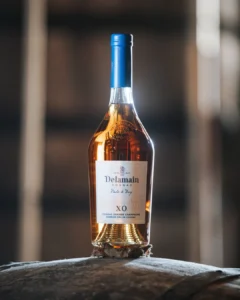
In premium expressions such as Delamain Pale and Dry Xo Grande Champagne Cognac, this balance between oak influence and natural spirit elegance becomes especially evident, reflecting careful maturation rather than aggressive wood impact.
Cellar Master Tradition and Heritage Stewardship
Behind every barrel is a guiding hand known as the cellar master.
Cellar master cognac tradition responsibilities
- Monitoring barrels across aging stages
- Deciding blending timing and direction
- Preserving house style across generations
Their role ensures continuity between past and present production. In long-aged expressions like Delamain Xxo Grande Champagne Cognac, this stewardship becomes critical, as decisions taken decades apart shape the final profile.
The Signature of Grande Champagne Aging
As cognac matures, its sensory profile transforms significantly.
Dried fruit notes cognac profile development
- Fresh fruit notes evolve into dried fig and apricot tones
- Floral hints become subtle and integrated
- Spice elements deepen into warm complexity
Texture and finish evolution
- Harsh edges smooth naturally over time
- Mouthfeel becomes rich and rounded
- Finish becomes longer and more refined
How Cognac Storage Traditions Preserve Heritage
Storage methods are not static; they are part of tradition.
Cognac storage traditions inside cellars
- Barrels are rotated based on aging stage
- Humidity zones are carefully managed
- Older reserves are preserved for blending continuity
These practices ensure consistency across decades of production.
Timeless Value Hidden in Grande Champagne Cellars
The value of Grande Champagne cognac is shaped by time rather than production scale.
What creates long-term value
- Limited survival of barrels through aging cycles
- Natural evaporation reducing available stock
- Multi-generational blending practices
Each expression reflects both natural evolution and human expertise refined over decades.
How Grande Champagne cognac Differs from Other Cognac Crus
Grande Champagne cognac stands apart from other crus due to its structure, aging potential, and finesse. While all cognac regions contribute to the category, Grande Champagne consistently produces eaux-de-vie that mature slowly and develop deeper complexity over time.
The difference lies in its chalk-heavy soil, which enhances acidity and allows longer aging without losing balance. This results in a refined profile with layered aromas and a long finish. In contrast, other crus often deliver earlier maturity, stronger fruit expression, or lighter body, depending on their terroir and soil composition.
Understanding Each Cognac Cru and Its Distinct Character
Each cru within the Cognac region brings a unique identity shaped by soil, climate, and aging behaviour.
Grande Champagne
- Produces the most age-worthy eaux-de-vie
- High acidity supports long maturation
- Delivers elegant, floral, and complex profiles over time
Petite Champagne
- Similar soil composition but slightly less depth
- Matures faster than Grande Champagne
- Balanced profile with refined but lighter structure
Borderies
- Smallest cru with clay and flint soils
- Known for round, soft, and floral characteristics
- Develops quicker and offers immediate aromatic appeal
Fins Bois
- Wider region with mixed soil types
- Produces fruit-forward and approachable spirits
- Shorter aging cycle compared to Champagne crus
Bons Bois
- Coastal influence affects grape expression
- Heavier and more rustic profile
- Less focus on long aging potential
Bois Ordinaires
- Closest to the ocean with sandy soils
- Faster maturation with simpler structure
- Often used for blending rather than long-term aging
Conclusion
Rare cellars are not passive storage spaces. They are active environments where cognac aging heritage continues to evolve.
Inside these spaces, Grande Champagne cognac transforms slowly through soil influence, distillation precision, oak interaction, and cellar mastery. The result is not just a spirit, but a preserved history shaped by time.
Understanding Grande Champagne cognac reveals how patience and craftsmanship define premium positioning. Solis Group collaborates with partners who value authenticity, origin, and long-term brand building. If you are looking to expand your spirits offering with depth and credibility, let’s connect.
Every barrel carries a silent story one that connects land, craft, and generations within the heart of Cognac.
FAQs
What makes Grande Champagne cognac special?
It has chalk-rich soils that create high acidity and slow aging potential. This allows deeper complexity and refined structure over long maturation.
Why are rare cognac cellars important?
They maintain stable humidity and temperature for decades-long aging. This controlled environment shapes balance, depth, and aromatic evolution.
What role do copper stills play in distillation?
Copper stills remove impurities and refine aromatic clarity during heating. They help create a clean base spirit suitable for slow maturation.
Why is double distillation used in cognac?
It refines raw wine into a smoother, more concentrated eau-de-vie. This two-step process builds structure before barrel aging begins.
How do cellar masters influence cognac?
They monitor aging barrels and decide blending at precise maturity stages. Their judgment preserves consistency across generations of production.
What happens inside long aging cognac barrels?
Spirit slowly absorbs oak compounds while natural evaporation reduces volume. This intensifies aroma, smoothness, and overall flavour complexity.
Why do dried fruit notes develop in cognac?
Slow oxidation and oak interaction transform fresh fruit into deeper tones. Over time, notes shift toward fig, apricot, and raisin profiles.
How is Grande Champagne different from other crus?
It produces the most age-worthy spirits due to high acidity and finesse. Other crus mature faster but lack the same long-aging depth.
-
 Fins Bois Cognac Delivers Character Without Spotlight
 -
Sherry Casks Add Rich Layers to Scotch Whisky Maturation
-
Pale Rose Wine change Impression in Tasting Surprise
-
London Dry Gin Holds Its Classic Appeal than Modern Gin
-
Prestige Cuvée Champagne Showcases Winemaking Vision
-
Pinot Grigio and Sauvignon Blanc Meets Flavour Intensity
-
Understanding Pink Gin Texture with Different Temperatures
-
International Vodka Day Works Beyond Party Stereotypes
-
French Vermouth Styles Hides Herbs in Silky Wine Base
-
Oak Aged Red Wine delivers smoky warm finish
-
Christmas Cocktails You Can Make at Home
-
Sound Of Christmas Wine And Cheese?
-
A Fresh Take on New Year’s Resolutions
-
The Art of Smelling Wine Like a True Connoisseur
-
Looking for the Best Wine? Here's Where to Find It!
-
Read This Before You Buy Your Dad a Whisky.
-
Whiskey on the Rocks — Cool Choice or Flavor Mistake?
-
The Art of Pairing Wine with Indian Food
-
The Ingredients & Botanicals That Define Gin
-
Seven Days of Love — Wine for Valentine’s Week





-
Sherry Casks Add Rich Layers to Scotch Whisky Maturation
-
Pale Rose Wine change Impression in Tasting Surprise
-
London Dry Gin Holds Its Classic Appeal than Modern Gin
-
Pinot Grigio and Sauvignon Blanc Meets Flavour Intensity
-
Understanding Pink Gin Texture with Different Temperatures
-
International Vodka Day Works Beyond Party Stereotypes
-
French Vermouth Styles Hides Herbs in Silky Wine Base
-
Oak Aged Red Wine delivers smoky warm finish
-
Vodka Taste Differ Even When Recipes Match
-
Light and Full-Bodied Sparkling Wines Bring Two Taste Layers