
Cognac Labels Hold Clues That Transform How You Sip
If you have ever picked up a bottle of Cognac and felt like deciphering it required a PhD in French spirits, you are not alone. Those mysterious letters—VS, VSOP, XO, XXO—the names of regions, vintage years, or even terms like Single Barrel Cognac and Vintage Cognac, can feel like a cryptic code. And then there is the cognac colour, the style of the cognac bottle, and the elegant fonts that almost whisper, “I’m sophisticated—handle me with care.”
Here is the good news: these labels are not just decorative. They are a treasure map, a historical record, and a flavour guide all rolled into one. Every word, every symbol, every embossed logo holds a clue to the taste, aroma, and craftsmanship within. From casual sips to contemplative tasting sessions, labels guide your journey and let you truly appreciate good Cognac.
We will explore everything about Cognac labels—history, age statements, cru and terroir, vintage and barrel details, Flavors prediction, and how to decode cognac brands like a pro. By the end, you will not only understand how to drink Cognac but also how to choose the best Cognac for any occasion.
Why Cognac Labels Are More Than Decoration
At first glance, a luxurious Cognac bottle seems to be about glamour: gold foil, fancy fonts, embossed logos, and sometimes a wax seal. But the label is far more than an aesthetic flourish it is an entire information system.
Historically, Cognac labels were designed to communicate authenticity, origin, and age, helping buyers differentiate between Maison and styles. They were especially important when international trade became popular in the 18th and 19th centuries. Today, a label tells you who made it, how old it is, where the grapes grew, and what kind of Flavors journey you are about to undertake.
Maison and Cognac Brands
- The Maison, or producer, is often the first clue. Names like Hennessy, Rémy Martin, Martell, Courvoisier are instantly recognizable, but smaller cognac brands often hide exceptional craftsmanship in niche bottles.
- Each Maison has a signature style, from fruity and approachable blends to complex, oak-driven masterpieces. Knowing the Maison helps set expectations for Flavors.
Age Statement
- Look for VS Cognac, VSOP Cognac, XO Cognac, XXO Cognac. These letters are not decorative they reveal the minimum aging in oak barrels.
- Older does not automatically mean better; it means more complexity and a flavour suited for slow sipping.
Cru and Terroir
- Cru (region) hints at the character of the Cognac. Grande Champagne offers floral refinement, Borderies is nutty and round, while Fins Bois tends to be lively and rustic.
- Understanding cru is like knowing the “neighbourhood” your grapes grew up in; it predicts aroma and body.
An example of how cru and age come together can be found in premium releases like Delamain Xxo Grande Champagne Cognac, which combines long aging with exceptional Grande Champagne terroir to produce a refined and layered experience.

Understanding Cognac Age Labels: VS, VSOP, XO, XXO
Age labels are the most visible clue on a Cognac bottle, but they carry deep significance. Let us explore:
VS Cognac (Very Special, Minimum 2 Years)
- Profile: Light, bright, and fruity. Often youthful and energetic.
- Use: Can be enjoyed in cognac cocktails or lightly sipped.
- Flavour Notes: Pear, apple, citrus, subtle floral hints.
- Story: VS Cognac is often the entry point for new Cognac enthusiasts—it is approachable and forgiving.
VSOP Cognac (Very Superior Old Pale, Minimum 4 Years)
- Profile: Balanced, smooth, medium-bodied. Oak influence starts to emerge.
- Use: Ideal for sipping neat, tasting layered notes, or in classic cocktails like the Sidecar.
- Flavour Notes: Dried fruits, vanilla, cinnamon, subtle spice.
- Story: Often considered a “bridge” between approachable VS and mature XO Cognac.
XO Cognac (Extra Old, Minimum 10 Years)
- Profile: Deep, complex, contemplative.
- Use: Best for slow, mindful sipping. The Flavors evolve sip by sip.
- Flavour Notes: Chocolate, roasted nuts, dried fruits, gentle floral undertones, lingering oak finish.
- Story: XO Cognac allows the drinker to truly explore the Maison’s blending skills and the nuances of barrel aging.
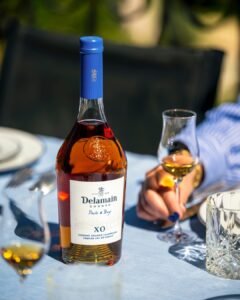
A noteworthy example is Delamain Pale and Dry Xo Grande Champagne Cognac, celebrated for its delicate floral aroma and balanced oak, which demonstrates the elegance and complexity that XO Cognacs can achieve.
XXO Cognac (Extra Old, usually 20+ Years)
- Profile: Ultra-aged, rare, luxurious.
- Use: Collector-worthy, slow savouring, or special tasting sessions.
- Flavour Notes: Intensely layered, deep caramel, honeyed fruit, and complex floral-spice interplay.
- Story: XXO Cognac is often a statement of expertise from the Maison, a showcase of decades of aging mastery.
Cru and Terroir: Geography’s Role in Cognac Flavour
The region, or cru, where the grapes are grown, has an outsized influence on cognac colour, aroma, and flavour. Cognac is strictly produced in southwestern France, and each cru brings its personality:
- Grande Champagne: Floral, refined, elegant, long finish. Often used for Vintage Cognac.
- Petite Champagne: Smooth, fruity, slightly softer; approachable for beginners.
- Borderies: Nutty, round, subtle spice; gives character to Single Barrel Cognac releases.
- Fins Bois / Bons Bois / Bois Ordinaires: Rustic, lively, expressive; often blended into VS and VSOP Cognac.
Pointers:
- Look for “Fine Champagne” on the label—a blend of Grande and Petite Champagne (min. 50% Grande).
- Cru helps anticipate which cognac cocktails might complement the spirit’s natural Flavors.
- Aging potential correlates with cru: Grande Champagne grows more complex with time.
Vintage Cognac and Single Barrel Cognac
Some Cognac labels go beyond age and cru:
Vintage Cognac
- Made entirely from grapes harvested in a single year.
- Expressive and unique, influenced by that year’s climate.
- Perfect for enthusiasts exploring subtle differences across years.
Single Barrel Cognac
- Bottled from one specific aging barrel rather than a blended batch.
- Each barrel produces slightly different Flavors, making it unique.
- Often highlights the craftsmanship of a Cognac brand.
Pointers:
- Limited edition Vintage Cognac or Single Barrel Cognac often represents the pinnacle of the Maison’s skill.
- Observe the cognac colour; darker hues often indicate longer oak exposure.
How Labels Predict Flavour and Experience
Once you can read a Cognac label, it becomes a Flavors map:
- VS Cognac: Fruity, light, playful; great for cocktail experimentation.
- VSOP Cognac: Balanced, layered; ideal for sipping neat or semi-sweet cocktails.
- XO Cognac: Deep, complex; encourages contemplative tasting.
- XXO Cognac: Ultra-luxurious, collector-worthy; Savor slowly.
Pointers:
- Combine age + cru + Maison style to predict Flavors.
- Note cognac colour for hints on aging and barrel influence.
- Vintage and barrel info enhances Flavors expectation accuracy.
Common Misconceptions About Cognac Labels
Many misunderstand what is Cognac:
- Older is not always better. Blending style often matters more than age.
- Price ≠ Quality. Labels give more reliable guidance than cost.
- VSOP is not weak. It is approachable but still sophisticated.
Pointers:
- Learn how to drink Cognac guided by label cues.
- Do not overlook good Cognac in VS and VSOP categories.
- Recognize that cognac brands differ in style, so labels are context-dependent.
Tips for Reading Cognac Labels Like a Pro
- Identify the age designation: VS, VSOP, XO, XXO
- Check the cru for aroma and body clues.
- Observe vintage or barrel info for unique Flavors insights.
- Know the Maison’s style among best Cognac brands.
- Note the cognac colour for hints about oak influence.
- Combine label knowledge with tasting for a complete understanding.
Why Cognac Labels Transform How You Sip
Reading a Cognac bottle label changes everything:
- Predict Flavors before tasting.
- Appreciate craftsmanship from best Cognac brands.
- Choose the right Cognac for neat sipping or cognac cocktails.
- Understand subtleties in cognac colour, aroma, and aging.
Labels are more than words they are a roadmap to fully appreciating good Cognac.
Conclusion
Next time you hold a bottle of Cognac, pause and read the label. Maison, age, cru, vintage, and barrel details all convey a story. From Vintage Cognac to Single Barrel Cognac, from VS Cognac to XXO Cognac, every bottle offers a narrative for your senses.
By decoding labels, you learn how to drink Cognac with intention and insight. Every sip becomes part of a rich tradition, and your appreciation of cognac brands, cognac colour, and cognac cocktails deepens. Labels are your map, your history book, and your tasting guide all at once.
FAQs
What is Cognac?
Cognac is a type of brandy made in the Cognac region of France, distilled from specific grapes, and aged in oak barrels. Its Flavors and aroma are shaped by age, terroir, and craftsmanship.
How do I read a Cognac label?
Look for the Maison, age statement (VS, VSOP, XO, XXO), cru, and any vintage or barrel info. Each element provides clues about Flavors, aroma, and complexity.
What does VS, VSOP, XO, and XXO mean?
These are age designations: VS (2+ years), VSOP (4+ years), XO (10+ years), and XXO (20+ years), indicating the minimum aging in oak barrels.
What is the difference between Vintage Cognac and Single Barrel Cognac?
Vintage Cognac comes from grapes harvested in a single year, while Single Barrel Cognac is bottled from one specific barrel for unique character.
How does cru or terroir affect Cognac?
The cru, or growing region, influences Flavors and aroma. Grande Champagne is floral and elegant, while Broderies is nutty and warm.
How to drink Cognac properly?
Sip it slowly in a tulip-shaped glass to enjoy layered aromas. Labels guide whether it’s better neat, in a cocktail, or for slow tasting.
Can Cognac colour tell me anything?
Yes, the cognac colour indicates barrel aging and oak influence; deeper amber usually means longer maturation and richer Flavors.
What are some examples of high-end Cognacs?
Examples include Delamain Xxo Grande Champagne Cognac and Delamain Pale and Dry Xo Grande Champagne Cognac, showcasing complex Flavors and premium aging.
-
 True Essence of Champagne Comes from Its Grape Varieties
 -
Gin and Tonic Offers Superior Harmony than Cocktails
-
Spanish White Wine Varieties from Coast to Mountains
-
Beer Styles Decoded So Enjoy Your Pint on Your Own Terms
-
Reading Red Wine Tasting by Aroma Flavor and Finish
-
Battle of Purity vs Balance in Single Malt and Blended Whisky
-
Anatomy of Vodka Texture Driven by Its Base Ingredients
-
Signature Power of Port Wine Beyond the Fortified Sherry
-
Vermouth’s Botanical Deserves spot on World Vermouth Day
-
International Riesling Day Honors the Iconic Riesling Wine
-
Christmas Cocktails You Can Make at Home
-
Sound Of Christmas Wine And Cheese?
-
A Fresh Take on New Year’s Resolutions
-
The Art of Smelling Wine Like a True Connoisseur
-
Looking for the Best Wine? Here's Where to Find It!
-
Read This Before You Buy Your Dad a Whisky.
-
The Art of Pairing Wine with Indian Food
-
Whiskey on the Rocks — Cool Choice or Flavor Mistake?
-
The Ingredients & Botanicals That Define Gin
-
Seven Days of Love — Wine for Valentine’s Week





-
Gin and Tonic Offers Superior Harmony than Cocktails
-
Spanish White Wine Varieties from Coast to Mountains
-
Reading Red Wine Tasting by Aroma Flavor and Finish
-
Battle of Purity vs Balance in Single Malt and Blended Whisky
-
Anatomy of Vodka Texture Driven by Its Base Ingredients
-
Signature Power of Port Wine Beyond the Fortified Sherry
-
Vermouth’s Botanical Deserves spot on World Vermouth Day
-
International Riesling Day Honors the Iconic Riesling Wine
-
Celebrate Holi with Gin cocktails and Fearless Colours
-
Irish Whiskey rise from Global Lounges to Curated Shelves