
Champagne Grape Varieties and The Character Behind Every Blend
Champagne is recognised for its fine bubbles, lively freshness, and distinctive flavour. However, its character begins long before the bubbles appear. The grapes selected for its production play an important role in shaping its aroma, structure, acidity, and overall style. Even when two Champagnes come from the same region, their grape combinations can create noticeably different expressions.
Three varieties stand at the centre of this identity: Pinot Noir, Chardonnay, and Meunier. Each brings something different to the wine. Pinot Noir contributes structure and depth, Chardonnay adds freshness and elegance, while Meunier brings fruitiness and a softer character. Their individual qualities help explain why Champagne can display such a wide range of styles.
Understanding Champagne grape varieties makes it easier to recognise the differences between various expressions. It also reveals how growers and producers use grape selection and blending to create wines with distinct personalities.
Three Main Grape Varieties That Shape Champagne's Character
Champagne production is closely connected with three principal grape varieties: Pinot Noir, Chardonnay, and Meunier. These are the most recognised grapes used in Champagne, and each has different growing characteristics and contributes distinct qualities to the finished wine.
Although they belong to the same wine region, they do not produce identical results. Their differences become particularly important during blending, when producers bring together selected wines to achieve a specific character.
Each variety has a particular role:
- Pinot Noir: Contributes body, structure, depth, and red fruit characteristics.
- Chardonnay: Brings freshness, natural acidity, elegance, and citrus-led aromas.
- Meunier: Adds fruit-forward notes, softness, and roundness.
These contributions are not fixed rules. Their expression can change depending on vineyard location, growing conditions, vintage, and winemaking decisions.
Another important point is that Champagne does not always require all three varieties. Producers can work with a single grape or combine two or more varieties, depending on the style they want to create. These choices explain the diversity of Champagne grape varieties found across the region.
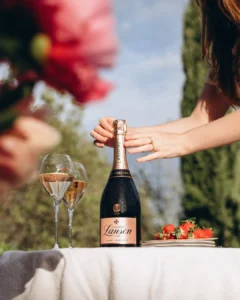
Lanson Le White Label Sec NV Champagne offers a distinctive expression with a balanced blend and a fruit-forward character. Its Sec style brings a noticeable touch of sweetness, complemented by freshness and aromatic complexity.
Pinot Noir Brings Structure, Body and Rich Fruit Character to Champagne
Pinot Noir is one of the most important black grape varieties used in Champagne. It is valued for its ability to contribute structure, body, and depth. Its characteristics help create a fuller expression that can give a blend greater presence.
Unlike white grape varieties, Pinot Noir has dark-coloured skins. However, the juice inside the grape is generally clear. Careful pressing and limited contact with the skins allow producers to make white Champagne from this black grape variety.
Red Fruit Notes Define Pinot Noir’s Character
Pinot Noir Champagne expressions are often associated with red fruit aromas, including cherry, raspberry, and strawberry. Depending on the growing conditions and winemaking approach, these characteristics can appear in different ways.
Some expressions show fresh red fruit notes, while others develop more mature fruit characteristics with ageing. These aromas contribute to the depth and aromatic complexity of Champagne.
Its flavour profile also makes it an important variety for producers looking to create a wine with a more pronounced fruit presence. Understanding Pinot Noir characteristics helps explain why this grape is valued for its structure and distinctive fruit expression.
How Pinot Noir Adds Structure to Champagne
Structure is one of Pinot Noir’s defining contributions. It can give Champagne greater body and a firm foundation, helping balance the freshness contributed by other grape varieties.
Its role becomes particularly noticeable in blends where Chardonnay provides acidity and Meunier adds fruitiness. Pinot Noir helps connect these different elements through its depth and weight.
This is one reason producers value Pinot Noir in Champagne when creating blends with a fuller and more structured character.
Important Growing Areas for Pinot Noir in Champagne
Pinot Noir is particularly associated with the Montagne de Reims and Côte des Bar areas. These are important Champagne wine regions, where vineyard conditions influence how the grape develops and expresses its characteristics.
The Montagne de Reims is known for its important Pinot Noir vineyards, while the Côte des Bar, located in the southern part of the Champagne region, also has a strong connection with this variety.
Soil composition, vineyard exposure, and local climate conditions can influence how Pinot Noir develops. These differences form part of the wider Champagne terroir and allow the same grape variety to express different characteristics across the region.
Chardonnay Creates Freshness, Elegance and Lasting Acidity
Chardonnay is the principal white grape variety used in Champagne. It is widely recognised for its fresh character, natural acidity, and delicate aromatic profile.
While Pinot Noir often contributes structure and body, Chardonnay brings a different dimension. Its freshness can make a blend feel balanced, while its aromatic qualities add refinement.
Citrus And Green Fruit Notes Define Chardonnay
Chardonnay Champagne expressions commonly display citrus, green apple, pear, and white flower characteristics. These aromas contribute to the grape’s fresh and delicate personality.
The exact expression depends on factors such as vineyard location, vintage conditions, and winemaking choices. Some expressions highlight crisp citrus notes, while others develop more mature fruit and floral characteristics.
This range makes Chardonnay a versatile variety that can contribute freshness without overpowering the other elements in a blend. These qualities are central to understanding Chardonnay characteristics and its contribution to Champagne’s overall identity.
Why Acidity Matters in Chardonnay-Based Champagne
Natural acidity is one of Chardonnay’s most important qualities. It gives the wine freshness and helps maintain balance between its different components.
Acidity also plays a role in the wine’s development over time. During ageing, Chardonnay-based wines can develop additional layers of complexity while retaining an important part of their fresh character.
For producers, this balance between freshness and development makes Chardonnay valuable in both single-variety expressions and multi-grape blends. This is one of the reasons Chardonnay in Champagne remains important across different styles.
Chardonnay And Its Connection with Blanc De Blancs
Blanc de Blancs Champagne is a style made exclusively from white grape varieties. Chardonnay is the most commonly used variety in this category.
These Champagnes are often associated with citrus aromas, floral notes, lively acidity, and an elegant structure. Their character highlights the qualities that Chardonnay brings to the region.
Although Chardonnay is closely linked with Blanc de Blancs, the term does not always mean that a Champagne contains Chardonnay alone. Other permitted white grape varieties can also be used.
This distinction is useful when understanding Champagne labels and the grape composition behind different styles.
Meunier Adds Fruitiness, Softness
Meunier, traditionally known as Pinot Meunier, is the third principal grape variety used in Champagne. It often receives less attention than Pinot Noir and Chardonnay, but its contribution is equally interesting.
Meunier Champagne expressions are valued for their fruit-driven character, softer expression, and ability to complement the other varieties. Meunier helps create a different dimension in blends, particularly when producers want to balance structure and acidity with a rounded fruit profile.
The Distinctive Fruit Character of Meunier
Meunier is commonly associated with apple, pear, and red berry characteristics. Its aromatic profile can offer a fruit-forward expression that differs from the more structured nature of Pinot Noir and the fresh citrus notes of Chardonnay.
Depending on the vintage and growing conditions, its fruit character can range from fresh and delicate to more rounded and expressive.
These qualities make Meunier an important variety for adding aromatic depth and variety to Champagne blends. Understanding Meunier characteristics also helps explain why it has a distinct place among the region’s principal grapes.
How Meunier Influences Texture and Balance
One of Meunier’s notable contributions is the softness it can bring to a blend. Its fruit-driven character can help create a rounded impression and complement the stronger structural qualities of Pinot Noir.
It also works alongside Chardonnay by adding another layer of fruit expression to its freshness and acidity.
The result depends on the proportion used and the characteristics of the individual wines. Meunier does not simply act as a supporting grape. It has its own identity and can play an important role in defining the final style. This contribution explains the importance of Meunier in Champagne.
The Importance of Meunier in The Vallée De La Marne
The Vallée de la Marne is particularly associated with Meunier cultivation. This area provides growing conditions that suit the variety, helping it maintain an important position in the Champagne region.
Meunier is known for its ability to perform well in certain cooler and more challenging vineyard conditions. Its growing characteristics make it a valuable option for growers across different parts of Champagne.
Its importance also reflects the diversity of the region. Champagne’s identity is not built around two famous grapes alone; Meunier contributes its own qualities to the overall picture.
How The Three Champagne Grape Varieties Work Together
Understanding each grape individually explains its personality, but blending reveals how their qualities interact. Champagne producers use blending to bring together different characteristics and create a particular style.
This process, known as Champagne blending process, is not simply about combining three varieties. It is about achieving harmony between their individual qualities while maintaining the intended identity of the wine.
Balancing Structure, Freshness and Fruitiness
Each grape variety contributes a different element to the blend.
- Pinot Noir provides structure: Its body, depth, and red fruit character can give a blend greater presence.
- Chardonnay provides freshness: Its natural acidity and citrus-led profile help maintain balance and elegance.
- Meunier provides fruitiness: Its softer texture and expressive fruit notes can create a more rounded character.
When these varieties come together, their qualities can complement one another. Pinot Noir gives depth, Chardonnay brings freshness, and Meunier adds another layer of fruit expression.
Lanson Le Black Creation NV Champagne reflects the house’s signature style through a blend of Pinot Noir, Chardonnay, and Meunier. It brings together freshness, structure, and expressive fruit notes with a balanced and layered character.
However, not every blend requires an equal contribution from each grape. The final balance depends on the producer’s approach and the desired style.
Why Champagne Producers Choose Different Grape Proportions
There is no single blending formula followed by every Champagne producer. The proportions of Pinot Noir, Chardonnay, and Meunier can vary considerably.
Several factors influence these decisions:
- Desired wine style: Producers select grape proportions based on the structure, freshness, and fruit expression they want to achieve.
- Vintage conditions: Weather patterns influence grape development, acidity, ripeness, and the characteristics of each harvest.
- Vineyard sources: Grapes from different villages and vineyard locations can offer varying levels of fruit expression and structure.
- Reserve wines: Producers may include wines from previous harvests to maintain consistency and develop additional complexity.
- House identity: Each Champagne house may have its own blending approach, which helps establish a recognisable style.
These decisions explain why Champagne grape blending can produce different results even when producers work with the same principal grape varieties. The proportions and selection of base wines help determine the final Champagne blend composition.
Can One Grape Variety Define an Entire Champagne
Yes. Champagne can be produced using a single grape variety, allowing its individual characteristics to become more prominent. These expressions are often described as single variety Champagne.
Two commonly recognised categories help explain this approach:
Blanc de Blancs: Made exclusively from white grape varieties, most commonly Chardonnay. It is generally associated with freshness, citrus notes, and an elegant structure.
Blanc de Noirs: Made exclusively from black grape varieties such as Pinot Noir and Meunier. Despite the use of dark-skinned grapes, the wine remains white because the juice is separated from the skins during production.
These styles show that Champagne’s character does not depend entirely on blending all three principal varieties. Individual grapes can also define a distinctive expression.
How Champagne Grape Varieties Influence Different Champagne Styles
The relationship between grape varieties and Champagne styles becomes clearer when looking at some of the region’s recognised categories.
Different combinations can influence the wine’s colour, aroma, structure, and overall expression. Understanding these connections helps explain why Champagne styles are not limited to one particular flavour profile.
Blanc De Blancs Highlights Chardonnay’s Fresh Character
Blanc de Blancs is closely associated with Chardonnay and highlights the qualities of this white grape variety.
Its character often includes:
- Citrus and green apple aromas.
- Floral and delicate fruit notes.
- Lively acidity and freshness.
- A refined and elegant structure.
The style provides a clear example of how a single grape variety can influence the overall identity of Champagne.
Blanc De Noirs Shows the Character of Black Grapes
Blanc de Noirs Champagne highlights the qualities of black grape varieties, mainly Pinot Noir and Meunier.
Its character can include:
- Red fruit aromas such as cherry and raspberry.
- Greater body and structure.
- Richer fruit expression.
- Different levels of softness and depth, depending on the grape combination.
The exact profile depends on whether the producer uses Pinot Noir, Meunier, or both.
Rosé Champagne and The Role of Black Grapes
Rosé Champagne offers another example of how grape varieties influence the final wine’s character.
Pinot Noir and Meunier are important contributors to Rosé Champagne. Producers can create this style through different methods, including blending white wine with a proportion of red wine or using the saignée method.
The grape selection influences the fruit profile, colour, and overall expression. Pinot Noir can contribute red fruit depth, while Meunier can add a softer and more fruit-forward character.
The final result depends on the production method, grape proportions, and winemaking decisions.
What Changes When Champagne Is Made with Different Grape Combinations?
The combination of grape varieties can create noticeable differences in Champagne. Even when producers work within the same region, changing the proportions of each grape can influence the wine’s overall personality.
Here is how different Champagne grape combinations generally influence its character:
Chardonnay-led blends
These blends often highlight citrus aromas, natural acidity, freshness, and elegance. Chardonnay can provide a lively foundation while allowing other characteristics to develop around it.
Pinot Noir-led blends
These blends often show greater body, structure, and red fruit expression. Pinot Noir can give the wine a more pronounced presence and a deeper aromatic profile.
Meunier-led blends
These blends can highlight fruit-driven characteristics, softness, and roundness. Meunier offers an expressive profile that can make the blend feel more approachable in style.
Blends using all three varieties
Combining Pinot Noir, Chardonnay, and Meunier allows producers to bring together structure, freshness, and fruitiness. Their proportions determine how these qualities appear in the final wine.
It is important to remember that grape variety alone does not determine the final character. Vineyard conditions, vintage, fermentation, ageing, and dosage also influence the overall expression.
What To Look for When Understanding Champagne Grape Varieties
Knowing the three principal grape varieties can make Champagne labels and descriptions easier to understand. Instead of focusing only on the name of a producer or the style of a bottle, readers can also explore the grape composition behind it.
A few details can help build a clearer understanding:
- Check the Champagne style: Terms such as Blanc de Blancs and Blanc de Noirs provide useful information about the grape categories used.
- Explore the grape composition: Some producers share the percentages of Pinot Noir, Chardonnay, and Meunier used in their blends.
- Compare aromatic descriptions: Citrus, green apple, cherry, raspberry, and floral notes can offer clues about the grape varieties involved.
- Understand the structure: Descriptions mentioning body, acidity, freshness, and roundness can help explain the wine’s overall character.
- Consider the growing region: The origin of the grapes can provide additional context about their growing conditions and expression.
- Look beyond grape selection: Ageing, vintage conditions, and winemaking choices also play important roles.
These details provide a more complete way to understand Champagne. They also show why two wines made from similar grape combinations can still develop different characteristics.
Such differences reflect the wider Champagne flavour profile, where grape selection works alongside vineyard origin, ageing, and winemaking decisions.
Conclusion
Pinot Noir, Chardonnay, and Meunier each contribute a different personality to Champagne. Pinot Noir brings structure and depth, Chardonnay adds freshness and elegance, while Meunier contributes fruitiness and softness.
Their individual qualities explain much of the diversity found across the region’s wines. Some expressions highlight the freshness of Chardonnay, while others focus on the structure of Pinot Noir or the fruit-driven character of Meunier. Blending brings these elements together in different proportions, allowing producers to develop distinct styles and maintain their individual identities.
Understanding these Champagne grape varieties offers a clearer picture of what shapes the wine beyond its bubbles. At Solis Group, we bring together expertise in wine and spirits curation and importing. Talk to us to explore opportunities and build meaningful business relationships. It reveals how grape selection, vineyard conditions, and blending decisions work together to define Champagne’s character.
These differences are also part of the region’s long-standing Champagne winemaking traditions, where careful grape selection and blending reflect the experience of individual producers. The result is a wide range of expressions shaped by grape quality, regional conditions, and Champagne craftsmanship.
FAQs
Why Are Three Grapes Important in Champagne?
Pinot Noir, Chardonnay, and Meunier contribute different qualities, including structure, acidity, and fruitiness. Their combination allows producers to create Champagne with varied aromas, textures, and styles.
Which Grape Gives Champagne More Body?
Pinot Noir generally contributes greater body, depth, and structure to Champagne. Its red fruit character also adds richness to the overall flavour profile.
Why Is Chardonnay Used in Blanc De Blancs?
Chardonnay is a white grape variety that brings freshness, citrus notes, and natural acidity. Its characteristics make it the principal grape associated with Blanc de Blancs Champagne.
Can Champagne Contain Only Pinot Noir?
Yes, Champagne can be made entirely from Pinot Noir, creating a single-variety Blanc de Noirs expression. Its character often highlights red fruit aromas, body, and structure.
How Does Grape Blending Change Champagne's Character?
Blending adjusts the balance between acidity, body, fruit expression, and aromatic complexity. Producers select grape proportions to create a consistent house style or a particular wine profile.
Where Is Meunier Mainly Grown in Champagne?
Meunier is particularly associated with the Vallée de la Marne, where it performs well in local growing conditions. The variety is valued for its adaptability and expressive fruit character.
What is Difference Between Blanc De Noirs and Rosé Champagne?
Blanc de Noirs is white Champagne made from black grape varieties, while Rosé Champagne has a pink colour achieved through permitted production methods. Both can involve Pinot Noir and Meunier.
Do Grape Varieties Affect Champagne's Ageing Potential?
Yes, grape varieties influence acidity, structure, and the wine's development over time. However, ageing potential also depends on vintage quality, blending decisions, winemaking, and maturation.
-
 Champagne Grape Varieties and The Character Behind Every Blend
-
Rich World of Red Wine Styles Reflect the Spirit of Celebration
-
Irish Whiskey and Diwali Connects Heritage & Festivals
-
Vermouth and Wine Share Similar Roots than Taste
-
Hidden Grain Clues Behind Distinct Vodka Flavour
-
Fins Bois Cognac Delivers Character Without Spotlight
-
Sherry Casks Add Rich Layers to Scotch Whisky Maturation
-
Pale Rose Wine change Impression in Tasting Surprise
-
London Dry Gin Holds Its Classic Appeal than Modern Gin
-
Prestige Cuvée Champagne Showcases Winemaking Vision


-
Christmas Cocktails You Can Make at Home
-
Sound Of Christmas Wine And Cheese?
-
A Fresh Take on New Year’s Resolutions
-
The Art of Smelling Wine Like a True Connoisseur
-
Looking for the Best Wine? Here's Where to Find It!
-
Read This Before You Buy Your Dad a Whisky.
-
Whiskey on the Rocks — Cool Choice or Flavor Mistake?
-
The Art of Pairing Wine with Indian Food
-
The Ingredients & Botanicals That Define Gin
-
Seven Days of Love — Wine for Valentine’s Week







-
Rich World of Red Wine Styles Reflect the Spirit of Celebration
-
Irish Whiskey and Diwali Connects Heritage & Festivals
-
Vermouth and Wine Share Similar Roots than Taste
-
Hidden Grain Clues Behind Distinct Vodka Flavour
-
Sherry Casks Add Rich Layers to Scotch Whisky Maturation
-
Pale Rose Wine change Impression in Tasting Surprise
-
London Dry Gin Holds Its Classic Appeal than Modern Gin
-
Pinot Grigio and Sauvignon Blanc Meets Flavour Intensity
-
Understanding Pink Gin Texture with Different Temperatures
-
International Vodka Day Works Beyond Party Stereotypes