

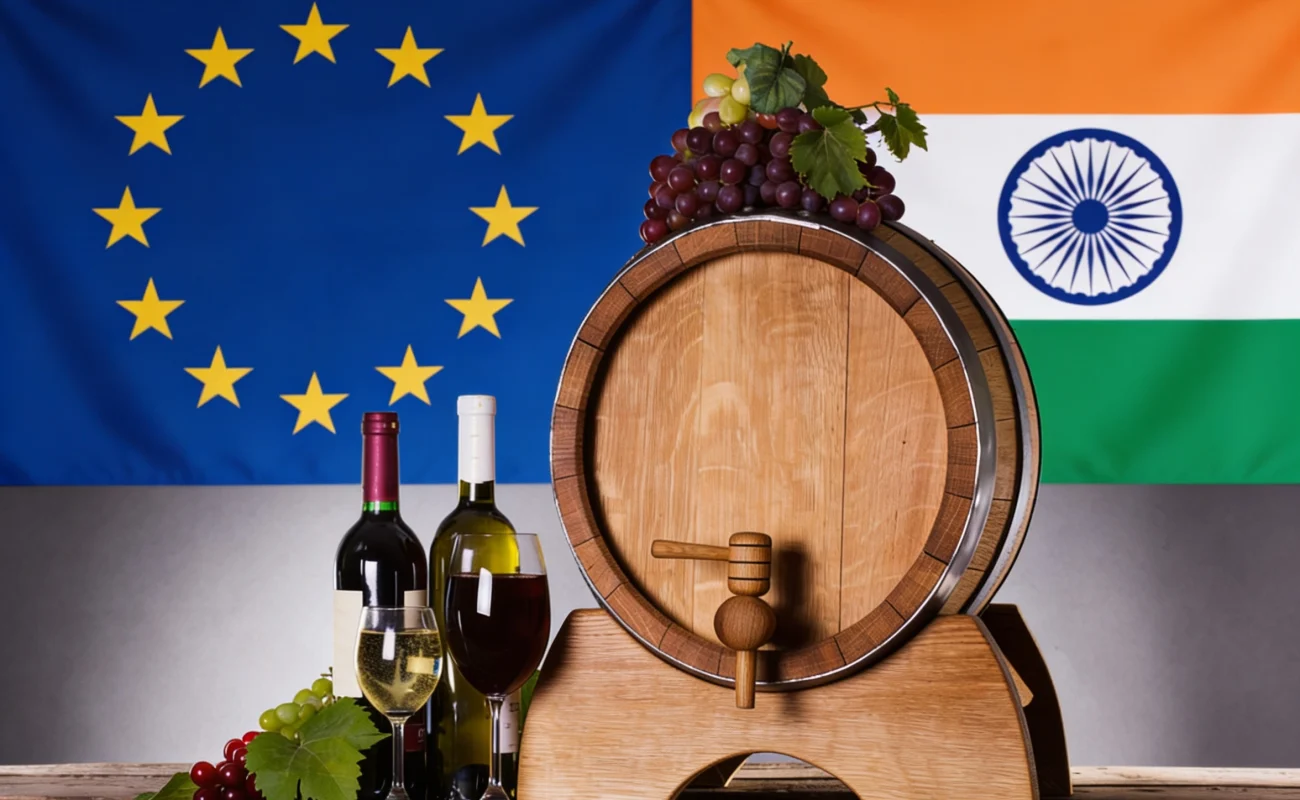
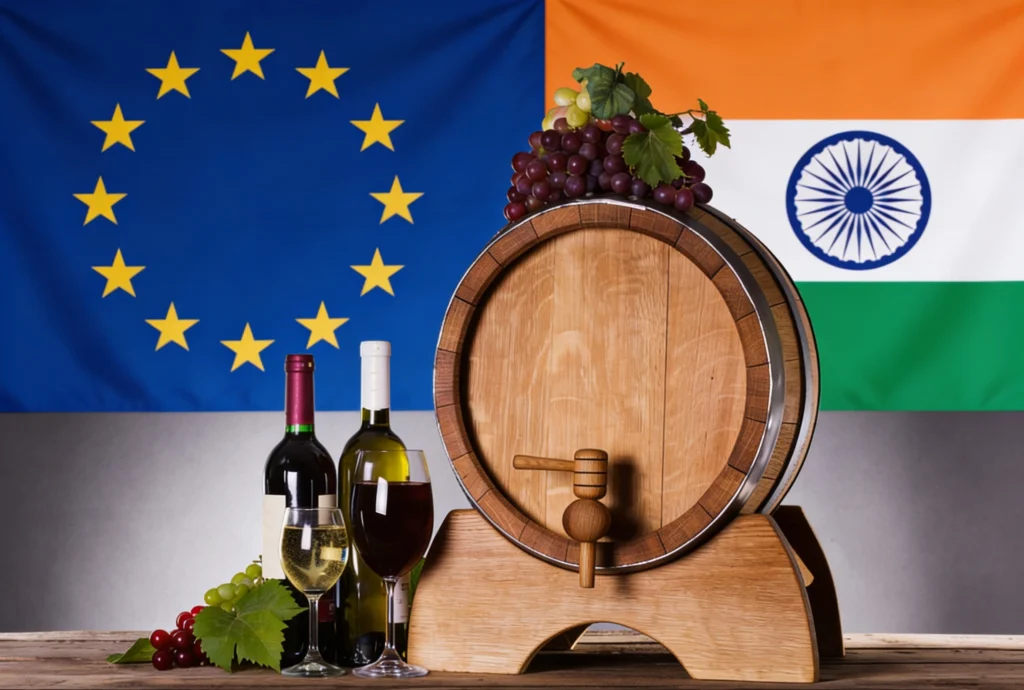
India-EU Free Trade Agreement Signals Big Moment for Imported Wine
For decades, imported wine in India has lived behind a price wall admired, discussed, but rarely understood in its true context. What Indian consumers often encountered was not the wine as it existed in Europe, but a heavily distorted version shaped by extreme duties and layered taxation.
Last week, that equation changed.
With the conclusion of the India-EU Free Trade Agreement, wine officially entered a new policy era. Not through sudden deregulation or aggressive liberalisation, but through something far more meaningful: a structured, long-term commitment to normalising how European wines is traded, priced, and consumed in India.
This agreement does not promise instant affordability. What it delivers instead is credibility, visibility, and direction three things the Indian wine market has long needed.
What the Agreement Actually Covers
The India-EU Free Trade Agreement is built around improving access, reducing excessive trade barriers, and creating predictable rules across sectors. Wine was included with deliberate caution, acknowledging its unique role in the spirit’s market.
Unlike mass-market alcohol, wine sits at the crossroads of agriculture, hospitality, and culture. This is why policymakers avoided a one-size-fits-all approach. Wine trade discussions recognised that blanket restrictions were holding back not just European wine, but the broader evolution of the domestic market. As this wine trade policy matures, it aligns wine more closely with food and lifestyle rather than volume-driven consumption.
This distinction is critical. It signals that wine is being integrated into trade policy as a lifestyle product, not treated as a regulatory afterthought.
The India–EU FTA is more than a tariff cut it is a wine trade policy blueprint for sustainable growth. Its key features for wine include:
- Phased Tariff Reductions: Duties on European wines will decrease gradually from historically high levels (around 150%) to 20–30% for premium wines.
- Differentiation by Category: The agreement recognises premium wines separately from entry-level imports, protecting domestic lower-end products while encouraging the growth of high-quality European wine imports.
- Timeline for Predictability: Gradual implementation ensures stability for wine importers, retailers, and hospitality operators.
- Structured Market Access: By formalising access rules, the FTA reduces uncertainty, enabling brand building and consistent pricing.
This framework ensures that the wine industry in India can grow responsibly, balancing domestic interests with international quality imports.
The Real Story Behind Tariffs
For years, wine import tariffs in India have been among the highest globally, pushing prices far beyond international benchmarks. Combined with layered wine import duty structures, this created a market where access was limited and exploration discouraged.
The impact was systemic:
- Narrow portfolios
- Distorted pricing ladders
- Hesitation among new consumers
Under the agreement, wine tariffs will reduce in phases, moving toward a more balanced range over time. This recalibration does not remove regulation but restores logic. As wine import tariffs in India normalise, pricing can begin to reflect quality rather than compounding taxation. Similarly, a restructured wine import duty framework creates breathing room for importers to plan responsibly.
Correcting wine tariffs is not about making wine cheap it is about making it fair.
Timeline Matters
One of the agreement’s most underappreciated strengths is its timeline, designed to support the long-term health of the wine market.
Phase One: Immediate Relief
Initial reductions ease landed costs, offering relief to stakeholders navigating a rapidly evolving wine market.
Phase Two: Portfolio Expansion
As duties reduce further, European wine imports can expand beyond a narrow set of labels. This phase is crucial for building diversity and encouraging discovery within European wine imports.
Phase Three: Long-Term Stability
Final tariff levels bring predictability. Planning replaces speculation, allowing the wine trade agreement to translate into sustainable growth rather than short-term spikes.
Which European Wines Stand to Gain the Most
France: Beyond Prestige
In India, European wine especially from France has often been admired from a far. High pricing reinforced its image as ceremonial rather than every day. As the wine trade agreement reshapes access, these wines can finally be enjoyed in their intended context. Over time, French wine regains its identity as a food-first, region-driven category.
Italy: The Mid-Segment Awakens
The recalibration of duties opens doors for Italian wines designed for daily enjoyment. As barriers ease, Italian producers can finally compete in the segment where Indian demand is growing fastest.
Spain and Portugal: Value Meets Authenticity
Spain and Portugal offer exceptional quality and heritage. Reduced barriers allow their wines to be positioned honestly, strengthening the foundation of premium wine consumption. This clarity supports the rise of imported wine as an experience rather than a status symbol.
What Changes for the Indian Wine Consumer
This agreement reshapes not just pricing, but behaviour across the wine consumption in India landscape.
Choice Becomes Meaningful
With improved economics, European wine imports diversify. Consumers gain access to styles that were previously unavailable or overpriced.
Confidence Replaces Hesitation
As pricing logic improves, curiosity grows. Repeated exposure reshapes wine consumption in India, turning wine from an occasional indulgence into a familiar dining companion.
Habit not novelty is what builds a market.
The New Role of the Wine Importer
As barriers soften, the role of wine importers becomes more influential than ever. The future will favour those who curate with intent rather than import indiscriminately.
Today’s wine importers must:
- Interpret regions for local palates
- Balance heritage with accessibility
- Invest in education and storytelling
As a global importer and curator of premium wines from Spain, Italy, France, and Portugal, Solis Group approaches the market with long-term relevance in mind selecting wines that align with evolving tastes rather than chasing short-term trends.
Why Curation Is the Market’s Missing Link
More wine does not automatically mean a stronger wine industry India.
A thoughtfully curated portfolio creates clarity. It helps consumers understand style, origin, and occasion, strengthening trust across the value chain. For restaurants and retailers, curated programs simplify decisions and elevate wine lists.
As the wine industry India continues to mature, curation becomes a competitive advantage rather than a luxury.
Where the Impact Will Be Felt First
Restaurants and hotels are where policy becomes experience. Improved access allows wine to integrate more naturally into dining culture.
This is also were premium wine gain renewed relevance. When fine wine and spirits are priced with integrity, they enhance the dining narrative rather than intimidating the guest.
Hospitality plays a critical role in shaping wine consumption in India, translating trade reform into real-world familiarity.
What Has Not Changed and Why That is Important
The agreement does not remove:
- State excise regulations
- Compliance requirements
- Distribution costs
However, by correcting wine import tariffs in India, the system becomes more workable. Structural challenges remain, but they no longer overshadow opportunity.
A Cultural Shift, Not Just a Trade Deal
Beyond economics, this moment reflects a deeper shift in how wine is viewed nationally. Wine is increasingly recognised as part of India’s evolving food and lifestyle identity.
As wine trade policy discussions continue and the wine trade agreement moves into implementation, this phase will be remembered as the point when structure replaced uncertainty.
As a curator of premium European wines, Solis Group stands at the intersection of this change bridging historic regions with a market ready to explore thoughtfully.
Conclusion
The India–EU Free Trade Agreement does not flood the market. It disciplines it.
By rationalising wine tariffs, supporting European wine imports, and encouraging thoughtful curation, the agreement lays the groundwork for a wine market that is credible, diverse, and built for long-term growth.
For hospitality professionals and trade partners, this shift unlocks real value more balanced pricing, deeper portfolios, and wines that can finally be positioned as they were meant to be: as part of the dining experience, not a premium anomaly. Established importers and curators like Solis Group, already deeply embedded in the Indian market, are uniquely positioned to translate these policy changes into practical advantages for restaurants, hotels, and distributors through well-structured portfolios from Spain, Italy, France, and Portugal, backed by market insight and trade understanding.
This agreement is not just about trade reform; it is about enabling the ecosystem to function better. For hospitality and trade stakeholders looking to strengthen their wine programs, expand European selections, or align with a curator that understands both global wine and Indian market realities, now is the right moment to engage.
To explore curated European wine portfolios connect with us.
FAQs
What is the India–EU Free Trade Agreement for wine?
It is a deal between India and the EU that reduces tariffs on European wines in phases, improving access and pricing for imported wine.
How does the India–EU FTA affect wine import tariffs?
The agreement gradually lowers duties from around 150% to 20–30% for premium wines, making imported wines more competitively priced.
Which European wines benefit most from the trade deal?
Premium wines from France, Italy, Spain, and Portugal see the biggest impact due to tariff reductions and improved market access.
What is the timeline for tariff reductions under the FTA?
Tariffs are phased over several years, with immediate reductions followed by medium- and long-term adjustments for stable pricing.
How will the deal impact wine consumption in India?
Lower tariffs and expanded portfolios make European wines more accessible, encouraging exploration and regular consumption.
What role do wine importers play after the FTA?
Importers curate and guide market access, helping consumers discover European wines while ensuring portfolio quality and relevance.
Will the trade deal flood the Indian wine market?
No, the phased approach ensures stability, supporting sustainable growth and a more credible, diverse wine market.
How can Solis Group help consumers discover imported wines?
Solis Group curates’ premium European wines, offering thoughtfully selected portfolios that simplify exploration and tasting.
-
 Anatomy of Vodka Texture Driven by Its Base Ingredients
 -
 Signature Power of Port Wine Beyond the Fortified Sherry
 -
 Vermouth’s Botanical Deserves spot on World Vermouth Day
 -
 International Riesling Day Honors the Iconic Riesling Wine
 -
 Celebrate Holi with Gin cocktails and Fearless Colours
 -
 Irish Whiskey rise from Global Lounges to Curated Shelves
 -
 Your Cognac Obsession Starts when You Discover the Six Crus
 -
 Air Steals Bold Character from Single Malt Whiskey Bottles
 -
 We Ditched Wine this Valentine Week for Pink Gin
 -
 Surprise Your Valentine with Roses and Rosé Champagne
-
 Christmas Cocktails You Can Make at Home
 -
 Sound Of Christmas Wine And Cheese?
 -
 A Fresh Take on New Year’s Resolutions
 -
 The Art of Smelling Wine Like a True Connoisseur
 -
 Looking for the Best Wine? Here's Where to Find It!
 -
 Read This Before You Buy Your Dad a Whisky.
 -
 The Art of Pairing Wine with Indian Food
 -
 Whiskey on the Rocks — Cool Choice or Flavor Mistake?
 -
 The Ingredients & Botanicals That Define Gin
 -
 Seven Days of Love — Wine for Valentine’s Week
-
Anatomy of Vodka Texture Driven by Its Base Ingredients
-
Signature Power of Port Wine Beyond the Fortified Sherry
-
Vermouth’s Botanical Deserves spot on World Vermouth Day
-
International Riesling Day Honors the Iconic Riesling Wine
-
Celebrate Holi with Gin cocktails and Fearless Colours
-
Irish Whiskey rise from Global Lounges to Curated Shelves
-
Air Steals Bold Character from Single Malt Whiskey Bottles
-
We Ditched Wine this Valentine Week for Pink Gin
-
 Wine Turns Valentine Week into a Test of Social Chemistry
 -
 India-EU Free Trade Agreement Signals Big Moment for Imported Wine