
Whiskey Secretly Borrows Colour from Oak Barrels
Whiskey does not start its journey with the rich golden or amber tones seen in a glass. At the beginning of its life, it is completely clear, with no visible colour at all. This raw spirit already carries potential in aroma and structure, but its visual identity is still absent.
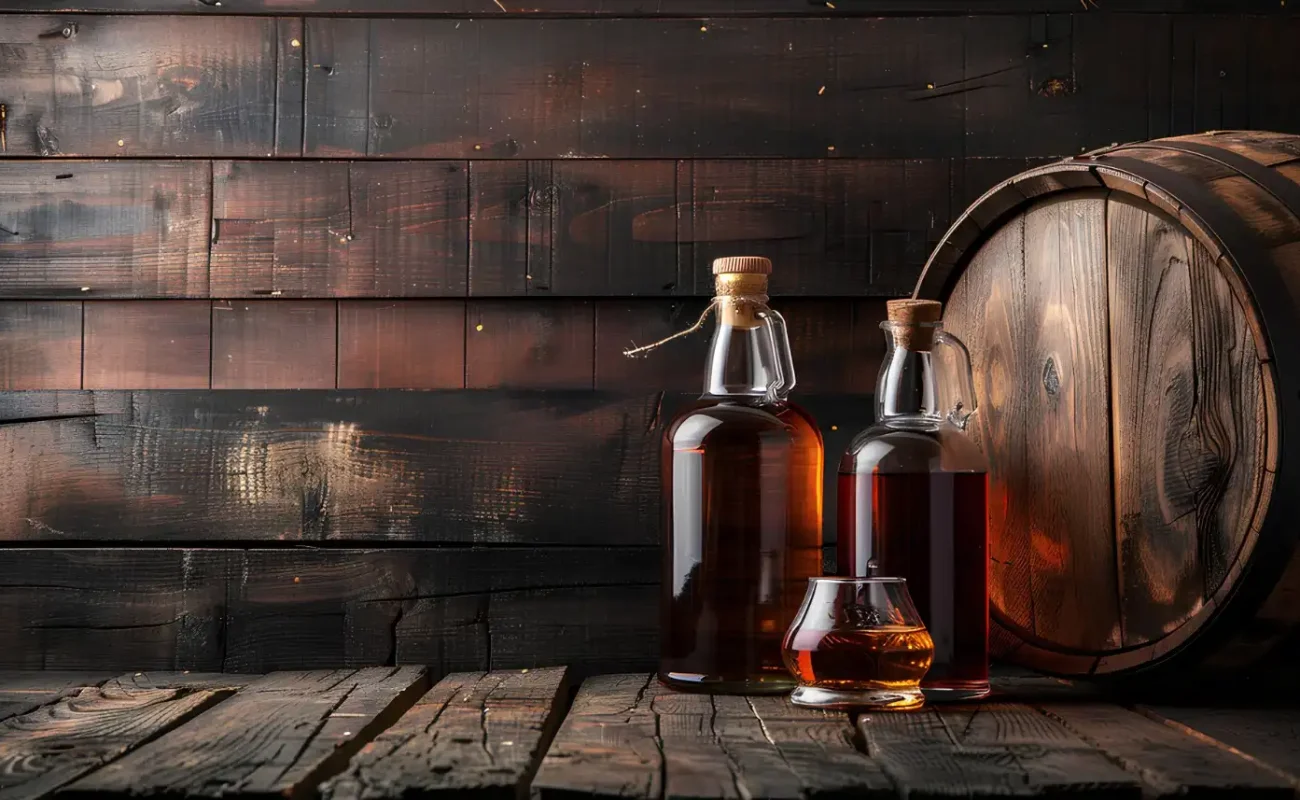
The transformation begins only when it enters oak whiskey barrels. Inside these barrels, whiskey is exposed to a slow, continuous interaction with wood, oxygen, and time. This is the foundation of the entire whiskey aging process, where both colour and complexity are built gradually rather than added instantly.
What makes this transformation fascinating is that the barrel does not simply store whiskey. It actively participates in shaping it. The colour we associate with maturity is actually the result of long-term chemical exchange inside the wood.
Oak Whiskey Barrels as the Core Engine of Colour Formation
Once whiskey is placed inside oak barrels, it begins to change at a molecular level. The wood is not inert. It contains natural compounds that slowly dissolve into the liquid and redefine its appearance over time.
This stage is also closely linked with early whiskey tasting notes, because colour development often moves alongside aroma and texture evolution.
At first, the whiskey may show a faint straw tone. With time, it deepens into soft gold, then richer amber, and eventually copper or mahogany shades depending on aging conditions. This is not a surface-level change. It is a layered transformation built through continuous wood contact.
The role of oak barrels in whiskey is therefore not just storage, but controlled transformation over time.
The Chemistry Behind Oak Whiskey Barrels and Colour Development
The colour inside whiskey is created through natural wood chemistry rather than artificial colouring. It contains structural compounds that gradually break down and react with alcohol.
Three major contributors define this process:
- Lignin: Slowly breaks down and produces warm golden and amber tones
- Hemicellulose: Reacts during barrel toasting or charring and forms caramel-like colour compounds
- Tannins: Add structure, dryness, and deeper visual richness over extended aging
These compounds do not transfer instantly. Instead, they are extracted gradually as whiskey moves in and out of the wood’s pores during temperature changes.
This slow exchange is a key part of how whiskey matures in oak barrels, ensuring that colour develops in layers rather than a single uniform shift.
How Time and Environment Shape Oak Whiskey Barrel Colour
Time alone does not create colour. Inside this, time works together with temperature, pressure, and liquid movement.
As temperature changes occur, the wood expands and contracts. This creates a breathing effect where whiskey is pushed into the wood and then pulled back out again. Each cycle increases contact with colour-forming compounds.
At the same time, evaporation reduces liquid volume. This process is often called the “angel’s share,” and it plays an important role in concentration. As liquid volume decreases, both flavour and colour become more intense.
Over long periods, this creates deeper tones and more complex whiskey tasting notes, especially in longer-aged expressions.
Sherry Cask Whiskey Colour and Flavors
A particularly important category is sherry cask whiskey colour and Flavors. These barrels previously held fortified wine, which leaves behind residual sugars, dried fruit compounds, and deep colour elements.
When whiskey is aged in these oak barrels, it often develops rich amber, mahogany, or deep copper tones. The colour is darker and more complex due to the influence of the previous contents of the barrel.
This style significantly impacts both appearance and depth in final whiskey tasting notes, often adding richness and complexity to the profile.
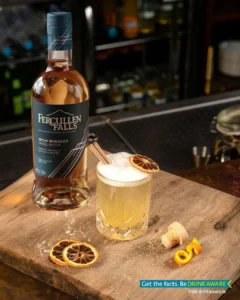
A clear example of this influence can be seen in Fercullen Falls Small Batch Blended Irish Whiskey, where barrel interaction plays a strong role in shaping both colour depth and layered maturation character.
Different Types of Oak Whiskey Barrels and Their Colour Influence
Not all whiskey barrels behave the same way. The type of oak used has a major impact on colour, texture, and overall profile. These differences also influence major whiskey types such as single malt whiskey vs Blended malt whiskey, and pot still whiskey.
American Oak Whiskey Barrels
American oak is one of the most commonly used woods in whiskey production. It has a relatively open grain structure, which allows faster interaction between spirit and wood.
Whiskey aged in American barrels often develops bright golden, honey-like, and warm amber tones. The colour evolution is generally faster and more vibrant.
This barrel type strongly influences approachable styles of single malt whiskey, where smooth golden tones are often preferred.
European Oak Whiskey Barrels
European oak has a tighter grain structure and higher tannin content. This results in slower extraction but deeper colour development.
Whiskey aged in European oak barrels often shows darker amber, copper, and occasionally reddish-brown tones. The visual depth is more intense and layered compared to American oak.
This barrel type is often associated with more structured and complex whiskey tasting notes.
French Oak Whiskey Barrels
French oak is known for elegance and balance. It releases compounds more gently, resulting in controlled colour development.
Whiskey aged in French whiskey barrels usually displays soft golden to light amber shades. The appearance is refined rather than bold, often supporting delicate expressions of whiskey types where subtlety is important.
Hungarian Oak Whiskey Barrels
Hungarian oak sits between American and French oak in behaviour. It provides moderate extraction and balanced development.
Whiskey aged in Hungarian whiskey barrels typically develops warm golden to medium amber tones over time. The progression is steady and consistent, making it suitable for structured aging styles.
Reused Oak Whiskey Barrels
Some oak barrels are reused after holding other spirits. Because much of their stronger compounds have already been extracted, they interact more gently with new whiskey.
These barrels generally produce lighter colour changes and softer golden tones. The development is more subtle but still contributes to layered whiskey tasting notes.
Barrel Charring and Its Role in Oak Whiskey Barrels
Before whiskey aging begins, many oak barrels are charred on the inside. This process creates a carbonized layer that changes how whiskey interacts with the wood.
The char layer acts like a transformation zone. It filters compounds, enhances caramelization, and influences both flavour and colour development. The intensity of charring directly affects how deep or light the final colour becomes.
Heavier char levels tend to produce richer amber and darker tones, while lighter char produces softer golden shades.
How Oak Whiskey Barrels Influence Different Whiskey Types
The impact of oak barrels varies depending on the type of whiskey being aged.
- Single malt whiskey often shows clear wood influence with layered colour development
- Blended malt whiskey may display more balanced and consistent tones due to mixing styles
- Pot still whiskey often shows a rich, textured appearance influenced by both grain and malt character
Each style responds differently to barrel interaction, but all depend heavily on the same aging environment.
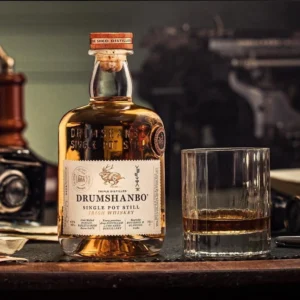
The earlier mentioned Drumshanbo Single Pot Still Irish Whiskey further demonstrates how different whiskey structures respond uniquely to oak influence while still following the same natural aging principles.
Why Colour Is Not a Perfect Measure of Age in Oak Whiskey Barrels
One of the most common misunderstandings in whiskey evaluation is linking colour directly with age.
In reality, oak barrels produce different colour outcomes depending on wood type, barrel reuse, char level, and climate conditions. A younger whiskey aged in active barrels can appear darker than an older whiskey aged in less reactive conditions.
This means colour reflects interaction intensity, not just time. It is one element of overall development, not a standalone measure of maturity.
Conclusion
The colour seen in whiskey is not original. It is a borrowed identity created slowly inside oak whiskey barrels through time, chemistry, and wood interaction.
Each barrel type contributes its own signature. American oak brings brightness, European oak adds depth, French oak offers elegance, Hungarian oak provides balance, and sherry cask aging adds richness and complexity through sherry cask whiskey colour and Flavors influence.
Building a distinctive portfolio requires more than availability it requires understanding, curation, and trust. Solis Group supports businesses with a focused approach to importing quality wine and spirits. Connect with us to explore how we can contribute to your growth journey.
Together, these elements define how whiskey matures visually and structurally. The final colour is not just appearance. It is the visible record of the entire whiskey aging process, shaped patiently inside oak barrels over time.
FAQs
Why does whiskey change colour in oak barrels?
Whiskey changes colour because it extracts natural compounds like lignin and tannins from oak whiskey barrels. These compounds slowly dissolve into the spirit during aging and build amber tones over time.
Does whiskey colour come only from oak barrels?
Yes, most natural colour comes from oak whiskey barrels through long-term wood interaction. Some bottles may use caramel colouring, but true aging colour is barrel-driven chemistry.
Why do oak whiskey barrels matter in aging?
Oak whiskey barrels control oxidation, evaporation, and wood extraction during maturation.
This interaction shapes both colour depth and structural complexity in whiskey.
Does darker whiskey mean older whiskey?
Not always, since barrel type and char level can darken whiskey faster than time alone.
Colour reflects interaction intensity, not a direct measurement of age.
What is the role of char in oak whiskey barrels?
Char creates a carbon layer that filters spirit and enhances chemical transformation.
It deepens colour by encouraging caramel-like compound development.
How does American oak differ in whiskey colour?
American oak whiskey barrels produce brighter gold and honey tones due to faster extraction. They create lighter, sweeter visual profiles compared to heavier oak styles.
How does European oak affect whiskey colour?
European oak whiskey barrels contain higher tannins, leading to deeper amber and copper shades. The colour develops slower but becomes richer and more intense
How do oak whiskey barrels shape whiskey types differently?
Single malt whiskey often shows clearer wood influence, while blended styles appear more balanced. Pot still whiskey develops a textured colour profile due to mixed grain structure.
-
 Fins Bois Cognac Delivers Character Without Spotlight
 -
Sherry Casks Add Rich Layers to Scotch Whisky Maturation
-
Pale Rose Wine change Impression in Tasting Surprise
-
London Dry Gin Holds Its Classic Appeal than Modern Gin
-
Prestige Cuvée Champagne Showcases Winemaking Vision
-
Pinot Grigio and Sauvignon Blanc Meets Flavour Intensity
-
Understanding Pink Gin Texture with Different Temperatures
-
International Vodka Day Works Beyond Party Stereotypes
-
French Vermouth Styles Hides Herbs in Silky Wine Base
-
Oak Aged Red Wine delivers smoky warm finish
-
Christmas Cocktails You Can Make at Home
-
Sound Of Christmas Wine And Cheese?
-
A Fresh Take on New Year’s Resolutions
-
The Art of Smelling Wine Like a True Connoisseur
-
Looking for the Best Wine? Here's Where to Find It!
-
Read This Before You Buy Your Dad a Whisky.
-
Whiskey on the Rocks — Cool Choice or Flavor Mistake?
-
The Art of Pairing Wine with Indian Food
-
The Ingredients & Botanicals That Define Gin
-
Seven Days of Love — Wine for Valentine’s Week




-
Sherry Casks Add Rich Layers to Scotch Whisky Maturation
-
Pale Rose Wine change Impression in Tasting Surprise
-
London Dry Gin Holds Its Classic Appeal than Modern Gin
-
Pinot Grigio and Sauvignon Blanc Meets Flavour Intensity
-
Understanding Pink Gin Texture with Different Temperatures
-
International Vodka Day Works Beyond Party Stereotypes
-
French Vermouth Styles Hides Herbs in Silky Wine Base
-
Oak Aged Red Wine delivers smoky warm finish
-
Vodka Taste Differ Even When Recipes Match
-
Light and Full-Bodied Sparkling Wines Bring Two Taste Layers